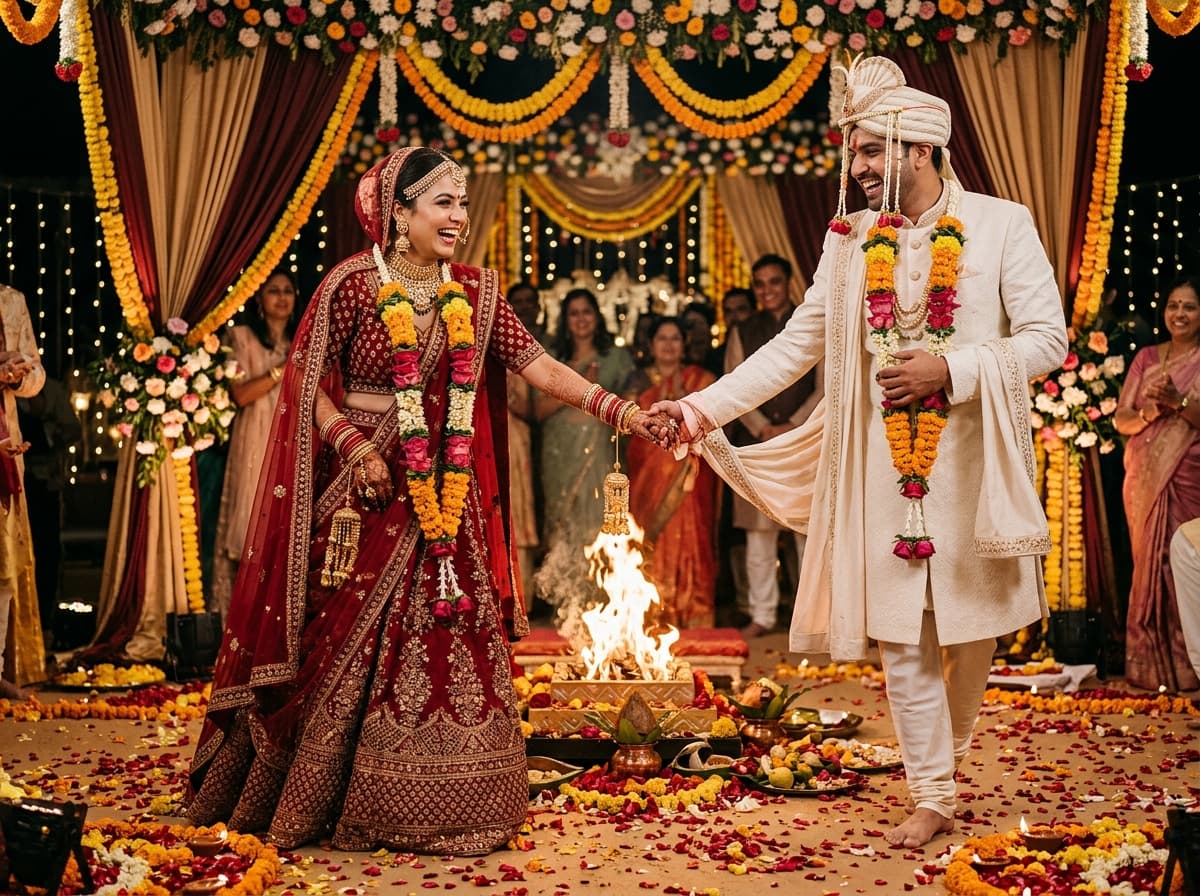
When booking wedding videography in Ranchi or Jharkhand, almost every couple hears terms like "Traditional Video" and "Cinematic Teaser/Film." But what is the actual difference? Is cinematic videography just a fancy buzzword to charge more, or does it fundamentally change how you will remember your wedding 20 years from now? Here is the honest, technical, and creative breakdown.
1. Storytelling Philosophy: Documentary Movie vs CCTV Recording
The core difference lies in intent. A "normal" (traditional) video aims to record everything that happened, chronologically and without cuts. The cameraman stands at the back or beside the stage, keeping the camera rolling for 3 hours as guests greet the couple.
A "cinematic wedding film," by contrast, tells an emotional love story. It focuses on human expressions: the nervous smile of the groom as the Baraat starts, the tear sliding down the bride's mother's cheek during Kanyadaan, the whispered jokes between the couple on the mandap, and the energetic celebrations on the dance floor.
Instead of handing you a 4-hour raw video you will only watch once, a cinematic film delivers a breathtaking 3-to-5 minute highlight teaser plus a 15-to-20 minute short film that feels like a Netflix production.
2. Camera Equipment & Lenses: Shallow Depth of Field vs Deep Focus
• Normal Video: Shot on small-sensor broadcast camcorders. Everything from the couple's face to the buffet counter 30 feet behind them is in flat, sharp focus. Harsh on-camera halogen lamps are mounted on top, casting glaring yellow shadows across everyone's faces.
• Cinematic Video: Shot on large 35mm full-frame cinema cameras (such as Sony FX3, A7S III, or Canon R5C) using ultra-fast f/1.4 and f/1.8 prime lenses. This creates a dreamy, creamy background blur (bokeh) that isolates the couple and makes every frame look like a high-fashion movie poster.
3. Frame Rates & Motion Cadence (24fps vs 50fps)
Have you ever noticed why Hollywood cinema looks so different from daytime television news? It is all about frame rate.
Traditional video is recorded at 50 or 60 frames per second, creating hyper-smooth "video-like" motion. Cinematic films are captured strictly at 24 frames per second (23.976 fps) — the exact frame rate of classic cinema — paired with 100fps or 120fps high-speed capture for emotional slow-motion moments like flower showers during Jaimala.
4. Audio Design: The Hidden Secret of Great Cinema
A cinematic film is 50% visuals and 50% sound. In normal videography, the microphone stays attached to the camera, picking up loud banquet chatter, plate clatter, and echo from the hall speakers.
In Jharkhand Frames cinematic productions, we place wireless broadcast lavalier microphones on the groom and the pandit. This captures the sacred Sanskrit mantras, the father's emotional blessings, and the couple's laughter with studio clarity, which we weave seamlessly beneath licensed cinematic music.
5. Color Grading & Post-Production
Normal videos are delivered with whatever auto-color settings the camera recorded under chaotic banquet lighting.
Cinematic films undergo rigorous Hollywood-grade color grading. Skin tones are balanced, harsh yellow banquet lights are corrected, shadows are softened, and custom color LUTs (warm filmic palettes or rich royal tones) are applied to give every frame a timeless aesthetic.
Why You Need BOTH at an Indian Wedding
Do you have to choose between the two? No! In fact, most Indian families need both. Parents and grandparents want the full traditional documentary recording so they can see which relatives attended and watch the complete 2-hour havan rituals.
The bride and groom want the cinematic film to share on Instagram and re-watch on their anniversary. At Jharkhand Frames, our standard wedding packages include both seamless traditional video and high-end cinematic films.
Frequently asked questions
Jharkhand Frames — Jharkhand's trusted photography studio
100+ weddings · 1000+ videos · Teaser in 48 hours · On-time delivery guaranteed